
Aluminum deep processing is a necessary process for the completion of aluminum profile production — CNC, surface treatment, welding, forming, and more.
Aluminum profiles are a metal material with many advantages. They can be found in many aspects of daily life, such as doors and windows, ceilings, aluminum solar profiles, and heat sinks. The aluminum profiles used in these applications are produced through extrusion and require a series of aluminum deep processing steps to obtain aluminum alloy products with diverse colors, hardness, corrosion resistance, and high dimensional accuracy.
What Is Aluminum Deep Processing?
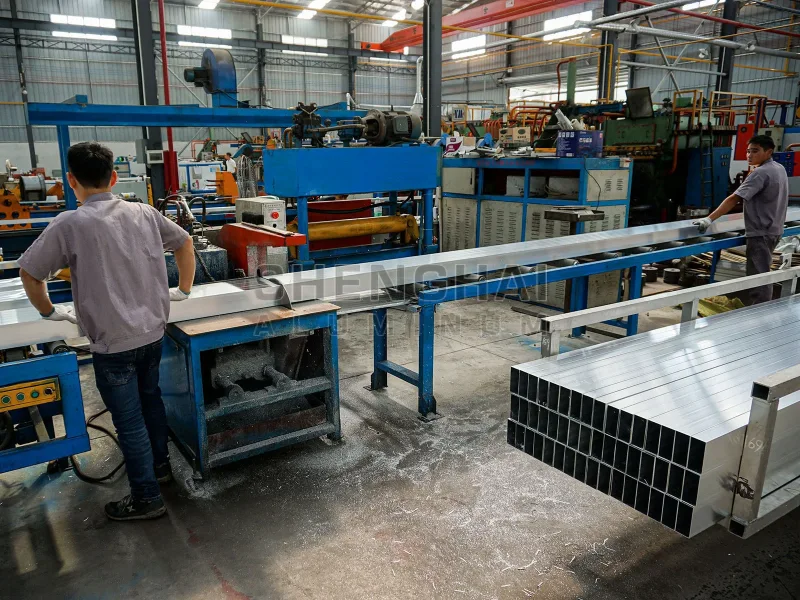
Aluminum profiles after extrusion are not considered complete products, they require a series of deep processing techniques to complete production. Aluminum deep processing involve further processing of semi-finished aluminum alloys, such as processes to ensure precise dimensions, adjust bending angles, and create protective surface layers. These are all part of the deep processing of aluminum profiles.
Applications
Thermal break aluminum doors and windows: The door and window frames require precise cutting to fit the door size. Only with precise dimensions can secure assembly and structural stability be ensured.
Heat sinks: The core function of a heat sink is thermal conductivity. Deep-processed aluminum has high thermal conductivity, as well as corrosion resistance and a long service life, making it ideal for heat sinks.
Aluminum solar profiles: Solar panels are constantly exposed to the elements, including rain, UV radiation, high temperatures, and strong winds. Therefore, aluminum profiles need aluminum deep processing to mitigate environmental impacts.
Reasons For Aluminum Deep Processing
The functionality of extruded semi-finished aluminum profiles is not diverse, their performance is relatively uniform, belonging to standard aluminum profiles.
What Are The Deep Processing Techniques?
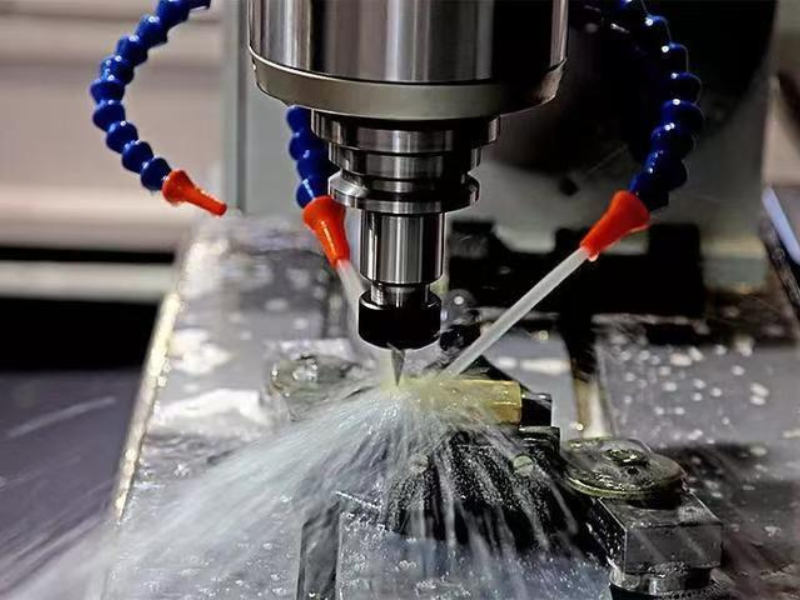
CNC Precision Machining — This is a processing method that uses computer numerical control (CNC) technology to control the machine.
Surface Treatment — Surface treatment can significantly improve the surface hardness and corrosion resistance of aluminum profiles.
Welding — Welding refers to the process of connecting multiple aluminum profiles under high-temperature conditions.
Forming Process — The forming process is a key step in aluminum extrusion, determining the specific shape of the aluminum alloy.
Manufacturing — The processing of aluminum doors and windows is also considered aluminum deep processing.
Aluminum Profile Deep Processing Manufacturers
Shenghai Aluminum is an aluminum profile manufacturer located in Foshan, Guangdong, China.