
How to design an extruded heat sink profile — heat transfer basics, fin geometry, manufacturing methods, and a practical design checklist.
What Are Extruded Heat Sink Profiles
Among all cooling methods, extruded heat sink profiles have become one of the most popular and cost-effective solutions. These components are created through the aluminum extrusion process, where heated billets are forced through a precision die to form complex cross-sections that maximize surface area and airflow.
Fundamentals of Heat Dissipation
For any heat source that cannot be effectively cooled by conduction itself, or requires higher heat dissipation efficiency, a heat sink is required.
- Conduction — heat flows from the heat source through the thermal interface material (TIM), into the heat sink base, and then spreads through the fins.
- Convection — heat exchange between the fin surfaces and the surrounding air (or fluid).
- Radiation — transfers heat via electromagnetic waves, especially in infrared.
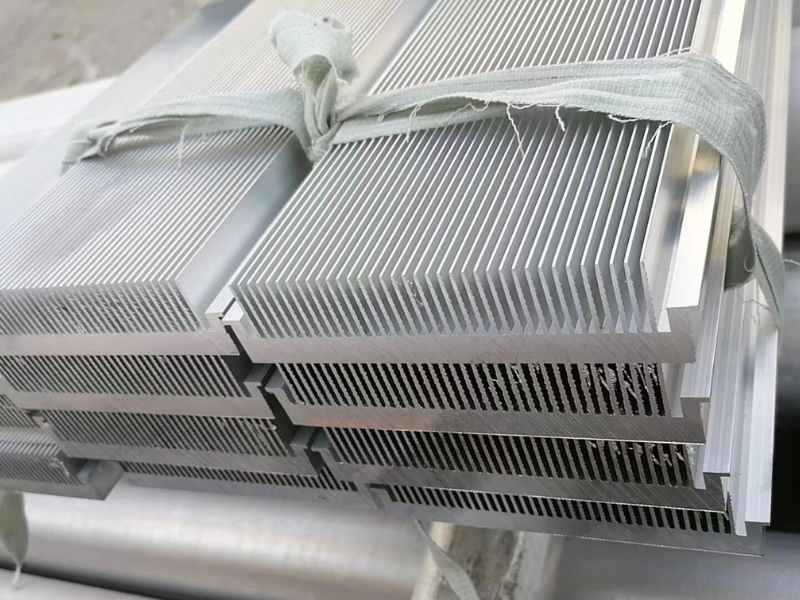
Why Choose Extruded Aluminum Heatsinks
Aluminum alloy was chosen for the heat sink because of its excellent thermal conductivity. 6063-T5 aluminum alloy, in particular, offers high thermal conductivity and excellent corrosion resistance.
Key Geometric Factors in Designing Extruded Heat Sink Profiles
- Fin thickness affects conduction and extrusion feasibility.
- Fin spacing controls airflow efficiency.
- Fin height determines surface area and pressure drop.
- The base thickness should provide sufficient heat spreading without adding unnecessary weight or cost.
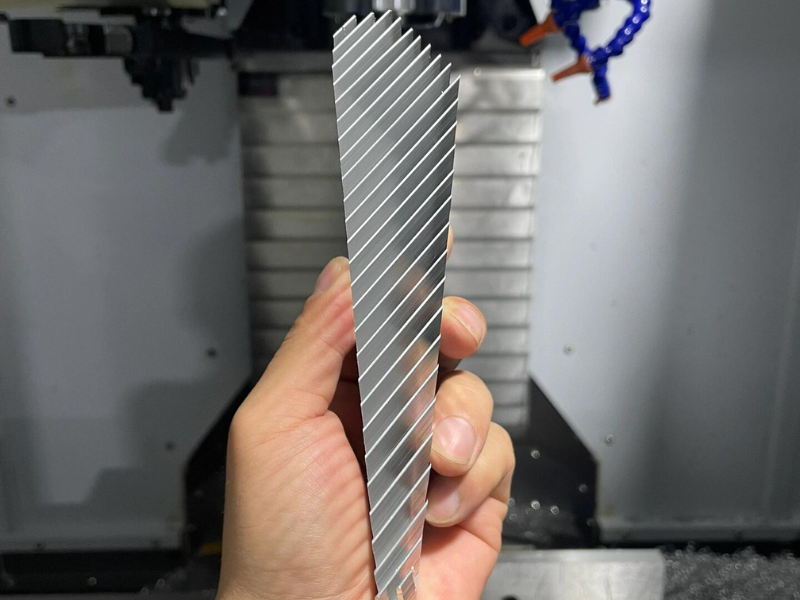
Heat Sink Types and Manufacturing Methods
Extrusion
Extrusion is the most common method for producing straight fins.
Forging
Forging is a manufacturing process that uses high pressure and temperature to transform metals such as aluminum or copper into the desired heat sink shape.
Stamping
Stamping is suitable for thin sheet metal straight fins.
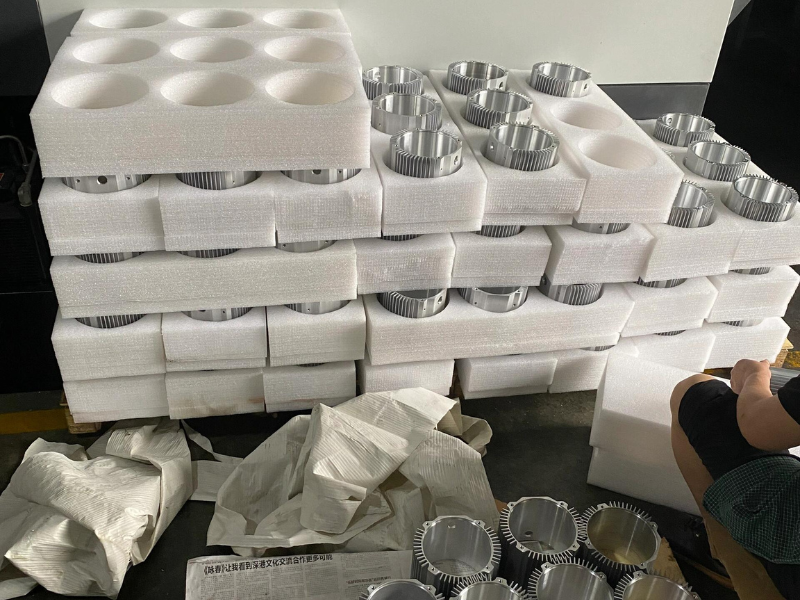
Skiving
Skiving creates high-aspect-ratio straight fins by cutting thin sheets from a solid block.
Bonded fins
Bonding attaches individual fins to a base by gluing, brazing, or welding.
Zipper fins
Zipper fins create a high-density straight fin structure by folding thin metal sheets.
Practical Design Checklist
For teams designing or purchasing extruded radiator profiles, we provide some practical design checklists to help you design better.
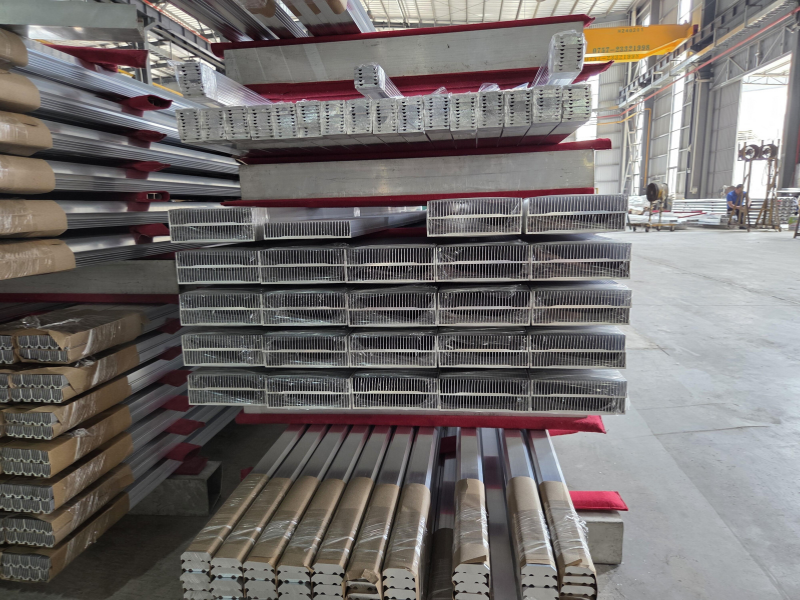
Shenghai Aluminum has extensive experience to ensure that extruded aluminum heat sinks maintain efficient heat dissipation and consistent quality in medium- to large-scale production.